|
|
|
|
Travel & Tourism
|
| Transport Services
|
| From trams (India's first and only) to metro (India's first) to yachts (waterscape in India's widest river spaces here is changing everyday), Kolkata transport is acknowledged in many surveys as the most plural service-system in the country.
|

|
Over 4162 route km- one of the best rail networks in the country
|
|
|
822 railway stations providing freight and passenger connectivity from major urban/rural nodes in the country
|
|
|
The evolving metro rail connectivity will make Kolkata the next most metro served city (after Delhi) within 5 years, with 128 kms of metro lines going up to distant suburbs. Public investments involved, exceed Rs 20,000 crore.
|
|
|
Monorail connectivity envisaged in NewTown in PPP mode
|
|
|
Airports- Kolkata International Airport, Bagdogra Airport (connecting Paro & Bangkok), Durgapur Airport (Domestic), Coochbehar Airport (Regional), Balurghat Airport (Plans to revive)
|
|
|
Air Connectivity
|
|
|
Chopper services to different cities
|
|
|
State support plan for airline services to improve regional connectivity
|
| Bangladesh, Bhutan, India and Nepal (BBIN) The Bangladesh, Bhutan, India and Nepal (BBIN) pact will boost connectivity among the four nations and promote trade and commerce. The pact will also allow motor vehicles to transport persons and cargo through each country more easily, helping businesses in overland trade among BBIN countries.
|
|
| Tourism and Entertainment
|
| Highlights
|
|
|
Market size in India at $117.7 billion in 2011 and is anticipated to touch $418.9 billion by 2022
|
|
|
6th most preferred destination for international tourists in India, with inflow of 1.38 million foreign tourists during 2014
|
|
|
Finest Multi-Star hotels and budget hotels in the State
|
|
|
Largest number of heritage clubs with all kinds of recreational facilities
|
|
|
5 golf courses, including the world's oldest outside UK
|
|
|
Royal Calcutta Turf Club- India's oldest race-course, still thriving
|
|
|
West Bengal Incentive Scheme, 2015, for Tourism Units announced
|
| Opportunities Galore
|
|
|
Geographical advantage of the Himalayan Mountains (Darjeeling), the Riverine Delta of Sundarbans and sea beaches.
|
|
|
Thrust for investments into tourism projects.
|
|
|
Priority to Eco Tourism, Tea Tourism, Medical Tourism and Home Stay.
|
|
|
New Tourism Hubs across State, like the Mega Hub at Gajoldoba, Siliguri
|
|
|
Another Mega Hub at Sundarban next to the Royal Bengal Tiger Rescue Centre over 100 acres of land.
|
| Tourism Potential in Bengal
|
|
|
Adventure Tourism
|
|
Cultural Tourism
|
|
Eco-Tourism
|
|
|
Tea Tourism
|
|
Rural Tourism
|
|
Medical Tourism
|
|
|
River Cruise
|
|
Religious Tourism
|
|
Wildlife Tourism
|
|
Tourism: Investment Opportunity in West Bengal

|
|
Bengal: On the Highway to Tourism Boom
|

|
Total length of Roads at a stupendous 2,11,770 km.
|
|
|
Present Road Density higher than National Average
|
|
|
West Bengal boasts Across-the-Spectrum Natural Diversity:
With hills and the Dooars in the North, the laterite landscape and the Gangetic Delta in the Central Region, and the seas in the South, West Bengal has a near representation of the entire world.
|
|
|
West Bengal is a veritable cultural and demographic mosaic. From the Gurkha and Lepcha tribals in the North to the ancient tribals, like the Santhals, the Oraons and the Mundas in the West, West Bengal is a demographic paradise. It has the prized inheritance of various folk traditions. It boasts the Bauls in Birbhum, the Fakirs in Nadia and ancient Chhou traditions in Purulia.
|
|
|
It prides itself on some magnificent Islamic architecture in Gour, Malda and terra cotta masterpieces in districts of Bardhaman and Bankura.
|
|
| Himalayas
|
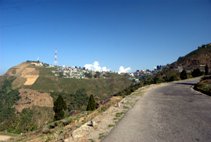
| Put your experience of getting mesmerized under challenge by discovering sheer artistry
of nature spread to every corner of the horizon. The lush green gardens at your
feet and snow-covered White Mountains at a distance seem like a wonderful experiment
of god with colors. It is the rendezvous of earth and heaven; it is the treasure
that you would keep in your heart forever. Hidden under the shadows of Eastern Himalayas,
the hill stations of West Bengal are the main footprint of tourism in the state.
Darjeeling, without a doubt is the most important and most visited hill station.
This unique destination is famous world over for its unparallel beauty. Darjeeling
and the other hill stations of West Bengal offer a magnificently rejuvenating respite
from the exhausting heat that adorns the majority of the state during the summer
months.
|
Kangchenjunga
|
|
|

|

|

|

|

|
| Kurseong
|
Kalimpong
|
Rimbik-Rishop
|
Lava Lolaygaon
|
Mirik
|
Sandakphu
|
|
| Mangrove
|
| Sundarban Biosphere Reserve was constituted by Government of India (GOI) in 1989
and it received the recognition of UNESCO under its Man and Biosphere (MAB) Programme
in November, 2001. Sundarban National Park, forming the core area of Sundarban Tiger
Reserve, received recognition as World Heritage Site by UNESCO in 1987. It has been
nominated by GOI for recognition as Ramsar Site (a wetland of international importance).
Sundarban Tiger Reserve was constituted by GOI under Project Tiger scheme, in 1973.
Sundarban is the only mangrove forest in the world which is the home of Tigers.
Sundarban Tiger Reserve has the highest tiger population in the world.
|
Sundarban
|
|
Importance of Sundarban Ecosystem
Sundarban has extremely rich diversity of aquatic and terrestrial flora and fauna.
Sundarban's highly productive ecosystem acts as a natural fish nursery. Sundarban
Mangrove reduces the fury of cyclonic storm and prevents erosion due to tidal action.
Finally, millions of people depend on Sundarban Ecosystem for their livelihood and
sustenance through fishing, collection of honey and fuel wood/timber.
Topography and Soil
Geologically, the Sundarban delta is the largest prograding delta on the globe.
The region is covered solely by quaternary sediments carried and deposited by the
rivers Ganges , Matla & Bidyadhari.
Climate and rainfall
Although the region is situated south of the Tropic of Cancer, the temperature is
equable due to its proximity to the sea. Average annual maximum temperature is around
35 C . Average annual rainfall is 1920 mm. Average humidity is about 82% which is
more or less uniform throughout the year.
|
| Tiger Census
|
|
The tiger estimation has traditionally been done in Sundarban by “Pug Mark Method”
in which the fresh left hind pug mark impression is collected from the field and
analyzed. The Pugmark method was field friendly but due to some of the drawbacks,
Project Tiger developed a new methodology for the “Monitoring of Tigers, Co-predators,
Prey and Habitat”.
The Monitoring of Tiger, Co-predators, Prey and Habitat Exercise in Sundarban was conducted from 5th January
2006 to 10th January 2006, as a part of All India estimation of Tiger, Co-predators, Prey and Habitat exercise. |
The Royal Bengal Tiger
|
|
Sundarban is among the five Natural World Heritage Sites In India namely, Kaziranga
National Park, Manas National Park, Keoladeo Wildlife Sanctuary, Sundarban National
Park and Nandadevi National Park.
The Sundarban Biosphere Reserve has three main objectives:
* Restoration of the unique mangrove ecosystem of Sundarban and conservation of
its biodiversity.
* Development of sustainable economic, social activities of the population living
in the Biosphere Reserve.
* Facilitating research, monitoring, education and training to perpetuate the achievements
made.
|
| People of the Sundarban
The people of this area are unique in their occupation and lifestyle, faiths, rituals
and beliefs – farmers, fishermen, wood collectors, honey collectors and poachers.
Sundarban represents a society that is primarily agricultural. The people live in
villages adjoining forests which is the home of Tigers. For survival, these people
have to fight with nature day in and day out. The hardships of daily existence have
given rise to fraternal feelings and non-communal traditions. Members of both Hindu
and Muslim communities worship the same Gods and Goddesses. The two most famous
among them are Dakshin Ray and Banabibi. Dakshin Ray is worshiped as the God of
Tiger and all those who enter the forests for subsistence, worship Dakshin Ray irrespective
of their caste, creed and religion. Banabibi, on the other hand, is considered as
the protector of the inhabitants of the forests. She is popular both amongst Hindus
and Muslims.
|
| Seas
Breathtaking Beaches promise the perfect escape to tranquility. The coastal strip
of West Bengal, extending from the Gangetic delta land to the border of Orissa,
presents some beautiful options in sea resorts - Digha, Shankarpur, Mandarmoni,
Bakkhali, Gangasagar, Tajpur,etc. All of these offer wide, flat, hard beaches, a
gently rolling sea, rows of casuarina forests and a pleasant, warm weather round
the year.
|

|

|

|

|

|

|
| Digha
|
Sankarpur
|
Mandarmani
|
Bakkhali
|
Gangasagar
|
Tajpur
|
|
| Forest
The natural beauty of the State, its snow-clad mountains, lush green forest, the
rolling Tea gardens, ripe agricultural fields in North Bengal, the red lateritic
tracts and the pure sal forests in the South West Bengal, and the world's largest
mangrove delta in Sundarban make the State potential paradise for Eco-tourism. Eco-tourism
is "tourism that involves travelling to relatively undisturbed natural areas with
the specified objectives of studying, admiring and enjoying the sceneries and its
wild plants and animals, as well as in existing cultural aspects found in these
areas" (WTO). Thus eco-tourism differs from Resort tourism or mass tourism by requiring
lesser infrastructure development and lower impact on the environment.
|

|

|

|

|

|

|
| Dooars
|
Duarsini
|
Ayodhya Hill
|
Jhargram
|
Mukutmanipur
|
Ramnabagan
|
|
| Heritage
The State of West Bengal has a lot to offer to the tourists. Whether they are the
chaste ripples in the waves of the Holy Ganga that bring in an effect of serenity
or the high-rise monuments that one would see on the Dalhousie Street or the sculpture’s
delight – the Victoria Memorial, Hazarduari, Shaheed Minar, or the Terracotta temples,
they all speak highly of the rich cultural heritage of the State of West Bengal.
|

|

|

|

|

|

|
| Victoria Memorial
|
Dakshineswar Temple
|
St. Pauls' Cathedral
|
Belur Math
|
Nakhoda Masjid
|
Cooch Behar Rajbari
|
|
|
|
Contents provided by the Commerce & Industries Department, Government of West Bengal
Site Designed, hosted and maintained by National Informatics Centre
Best Viewed in Internet Explorer 8.0/Firefox 3.6 or Later.
Legal Disclaimer
|
|
|